

Top 5 Lenders for Uber Drivers with Bad Credit in 2026
Last updated: 2026-11-09
Trying to manage money as a gig worker can feel like driving through a thick fog without any headlights. When a car needs a new transmission or a medical bill lands on your doorstep, the traditional banking system often leaves drivers out in the cold. Many lenders see a low credit score and see a dead end rather than a person working hard on the road.
For those living paycheck to paycheck—or rather, surge to surge—the lack of a steady W-2 salary makes even simple loan applications feel like an uphill battle. You are fighting against a mountain of bureaucracy that wasn’t built for people with non-traditional income. It is a frustrating cycle that can make financial stability feel out of reach.
This ranking focuses on finding realistic solutions for those who rely on 1099 income. We looked for lenders that understand the ebb and flow of gig work. Finding a lender that accepts non-traditional income streams is the difference between staying on the road and being sidelined by a sudden emergency. Whether you drive for Uber, deliver for DoorDash, or design graphics freelance, your income is unique.
- Giggle Finance
- FastLendGo
- Wise Finance
- Elite Personal Finance
- Discover
How We Evaluated Localized Lending Options
The comparison process focused on accessibility and speed. These are the lifeblood of anyone living day-to-day. We looked specifically at how these companies treat applicants with less-than-perfect credit histories. It is not just about the interest rate, but whether the lender actually understands that a driver’s income might fluctuate from week to week.
A driver might earn $1,200 one week during a holiday surge and only $600 the next during a slow period. A rigid lender that demands fixed, high monthly payments can trigger a cycle of missed payments and late fees. You need a partner that can handle the natural highs and lows of the gig economy without causing a crisis.
Speed of funding was a critical metric because an Uber driver cannot afford to wait two weeks for a repair loan. If a catalytic converter is stolen or a tire blows out on a Monday morning, you need funds by Tuesday to remain operational. We examined maximum loan amounts, minimum requirements, and general suitability for self-employed individuals.
The goal was to separate predatory lenders from the genuine financial partners available in the current market. We scrutinized application processes to see if they required mountains of paper documentation or if they could verify income through modern digital means. Efficiency is everything when your livelihood depends on your vehicle.
| Lender Name | Loan Amounts | Funding Speed | Credit Requirements |
|---|---|---|---|
| Giggle Finance | Up to $15,000 | Minutes | 1099 / Self-Employed |
| FastLendGo | $500 – $5,000+ | Quick Access | Bad, Fair, or Good Credit |
| Wise Finance | $500 – $10,000+ | Apply Online | See Site |
| Elite Personal Finance | Up to $5,000 | 5 Minutes | 400 – 500 Score |
| Discover | See Site | Pre-approval available | See Site |
Understanding the Impact of Variable Income on Loan Approval
One of the biggest hurdles for gig workers is the “stability” requirement. Traditional lenders want to see a two-year history of steady, predictable income. However, the gig economy is built on volatility. To get approved, you have to understand how lenders view your 1099 forms in the context of your actual cash flow.
Instead of looking for a single monthly paycheck, lenders looking at gig work will often aggregate your earnings from the last three to six months to determine your average monthly income. They want to see the big picture rather than a snapshot of a single slow week. This helps smooth out the bumps in your earnings history.
When preparing an application, having your digital statements from apps like Uber, Lyft, or TaskRabbit ready can be a game-changer. Many modern lenders have moved toward “open banking” technology, where they can instantly verify your earnings by connecting to your bank account. This is much faster than manually uploading dozens of PDFs.
By demonstrating a consistent average income—even if the weekly amounts vary—you can significantly increase your chances of approval. You don’t always need to rely on a traditional employer letter. Digital verification is becoming the new standard for people who work for themselves.
The Best Financial Options for Gig Workers
1. Giggle Finance
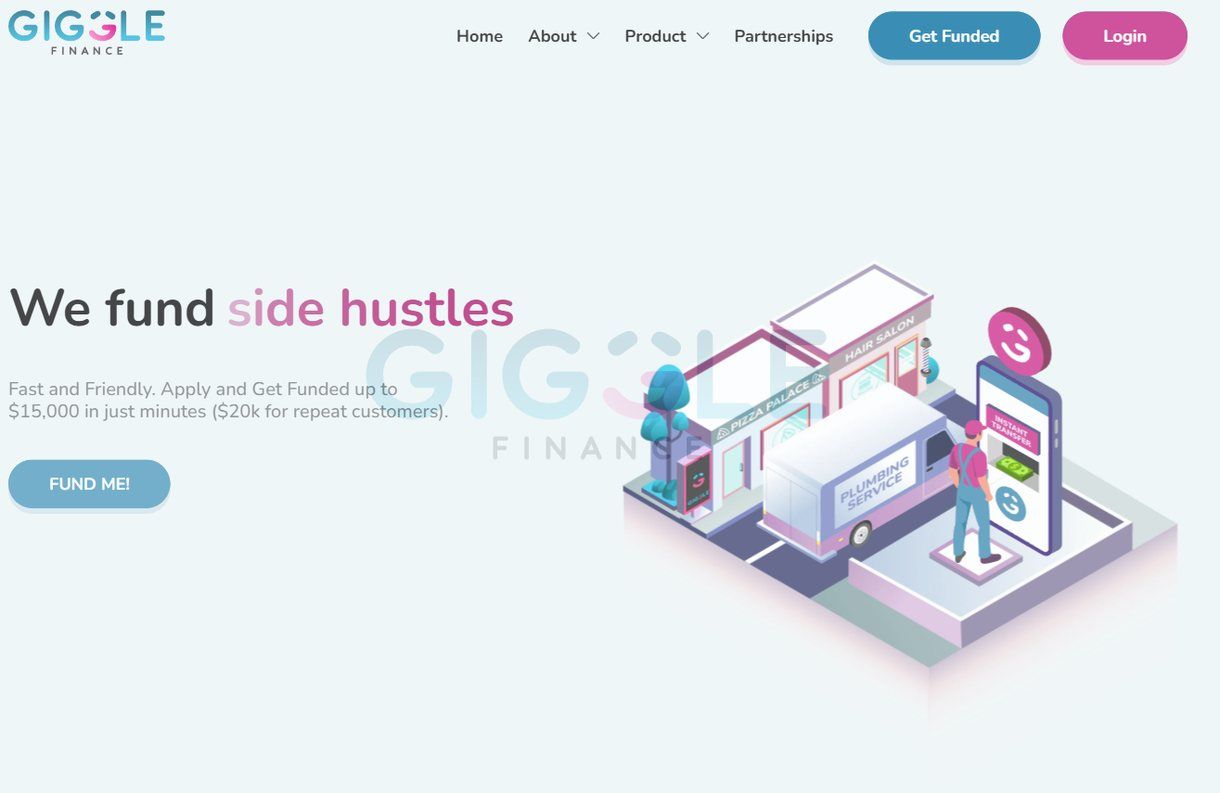
Giggle Finance operates with a clear understanding of the modern workforce. They specifically target side hustlers, contractors, and 1099 earners who often struggle to prove stability to traditional banks. If you are looking for a quick injection of cash to keep your vehicle running, their model is built for this exact scenario.
They recognize that for a delivery driver, the vehicle is not just a mode of transport; it is the primary tool of production. If the car stops, the income stops. Their focus on this reality makes them a standout choice for those in the driver community.
The speed is perhaps their most impressive feature, offering funding in just minutes. This is a vital distinction when compared to traditional bank loans that can take several business days to process and fund. For those who have built a relationship through repeat business, the ceiling even climbs higher, reaching up to $20,000.
It is a lifeline for small business owners and gig workers who need to bridge the gap between shifts or cover large, unexpected capital expenditures like a new set of tires or a transmission overhaul. They understand that time is money when you are on the clock.
Pros:
- Extremely fast funding process.
- Specifically designed for 1099 and self-employed workers.
- Higher limits available for returning customers.
Cons:
- Higher amounts are reserved for returning clients.
2. FastLendGo
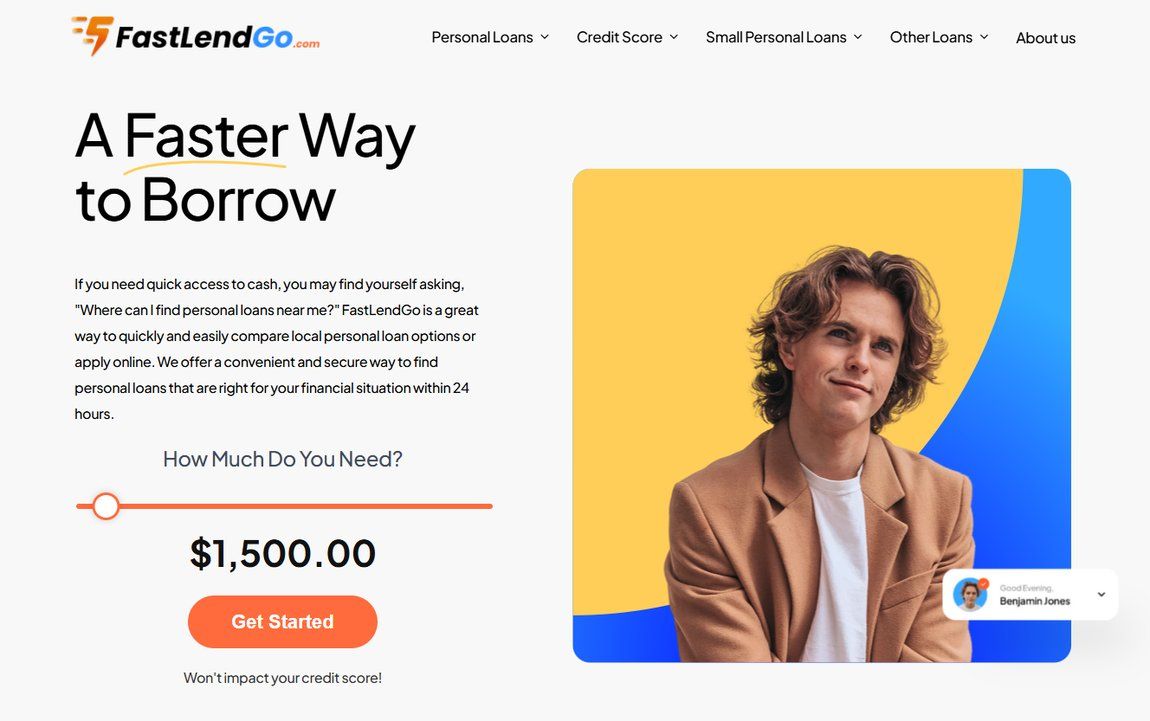
FastLendGo acts as a versatile bridge for various personal financing needs. They do not seem to care if your credit is struggling or if you are just starting out with no history at all. Whether it is an emergency car repair or a sudden dental bill, they offer a range of small loans to get you through.
This makes them particularly useful for the “micro-emergency”—those $500 to $1,000 expenses that aren’t life-altering but can ruin your month if left unpaid. If you need a quick fix to stay afloat, check them out at fastlendgo.com.
The company covers a wide spectrum of loan sizes, from a modest $500 to larger amounts of $5,000 or more. This flexibility is vital for drivers who might only need a small amount to fix a flat tire or a larger sum to replace a part that has finally given up the ghost.
Because they cater to a wide range of credit scores, they are often the first stop for someone who has been turned down by a local credit union or a major national bank. They fill the gap where traditional institutions often leave people stranded.
Pros:
- Offers various loan sizes from $500 upward.
- Covers multiple needs like auto and dental repairs.
- Accessible for bad credit borrowers.
Cons:
- The wide range of options may require more navigation.
3. Wise Finance
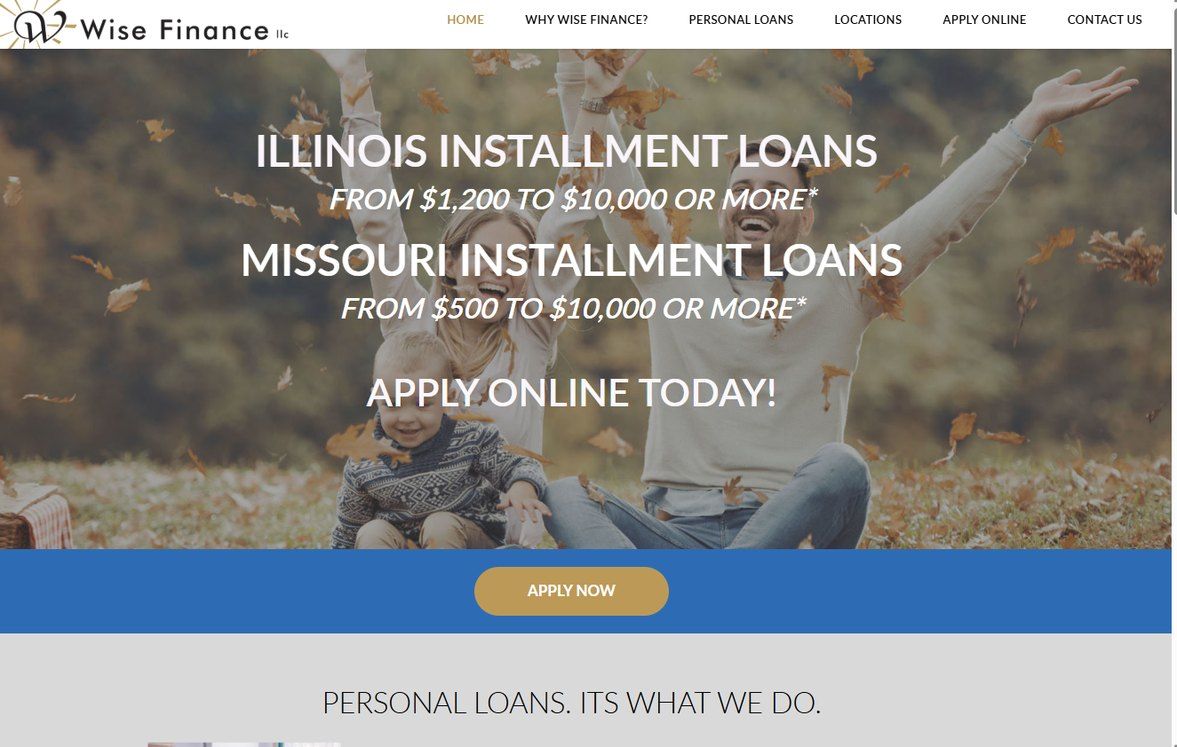
Wise Finance is a solid choice for those facing life’s unexpected curveballs. They focus heavily on installment loans, which provide a structured way to pay back what you borrow. This can be much more manageable than a single lump-sum payment that might cripple your weekly budget.
Installment loans break the debt down into predictable, bite-sized pieces that are easier to factor into a tight weekly budget. You know exactly what is coming out and when, which helps with the mental load of managing money.
They provide options for both personal expenses and auto-related needs, including refinancing. For a driver, the ability to look into auto loan refinancing could be a game-changer for managing monthly cash flow. If you have a high-interest car loan from a dealership, refinancing through a structured provider could potentially lower your monthly payment.
This frees up cash to cover other necessities like groceries or rent. They aim to help you cover the “life happens” moments without total financial chaos. It is about finding a rhythm that works with your actual spending habits.
Pros:
- Installment structures help with budgeting.
- Options for auto loan refinancing.
- Covers a wide range of unexpected expenses.
Cons:
- Specific availability may be limited by location.
4. Elite Personal Finance
Elite Personal Finance targets a very specific niche: those with significant credit challenges. They cater to individuals with scores as low as 400 to 500. This is a significant departure from traditional lenders who often turn their noses up at anyone in this credit bracket.
For those in this category, even finding a basic line of credit can feel impossible without significant collateral. They step in where others walk away, providing an alternative to the high-interest payday loans that trap so many people.
By offering personal loans with APRs between 15% and 20%, they provide a more sustainable way to manage debt. While a 20% APR might seem high to someone with a 750 credit score, it is a massive improvement over the 400% or 500% APRs often associated with predatory payday lenders.
It is a quick way to get approved, often within a five-minute window. This is essential for emergencies that cannot wait for a credit rebuild process. Sometimes, you just need the cash right now to keep moving forward.
Pros:
- Accepts very low credit scores (400-500).
- Faster approval times for quick cash.
- Provides an alternative to predatory payday loans.
Cons:
- Interest rates can be higher for lower credit scores.
5. Discover
Discover is a heavy hitter in the traditional banking world, known for its massive reach and reliability. While they might not be as specialized in the “gig worker” niche as some others, their stability is unmatched. They are a massive, FDIC-insured institution that offers a sense of security.
If you are looking for a long-term financial partner rather than a quick fix, Discover is a top-tier choice. They are the kind of lender you grow with as your career and credit score evolve over the years.
They offer pre-approval processes that allow you to check your eligibility without hurting your credit score. This is a low-risk way to see if you qualify for their products before you make any formal commitments. This “soft pull” on your credit is crucial for gig workers who are trying to manage their credit scores carefully.
It is a great option for those looking to build or maintain a solid financial foundation through credit cards or personal loans with competitive rates. It is a long-term play for those looking to move beyond the cycle of short-term loans.
Pros:
- No credit impact for checking pre-approval.
- Highly secure and FDIC-insured.
- Widely accepted and reputable brand.
Cons:
- May have stricter requirements than specialized gig lenders.
Strategic Borrowing for the Self-Employed
When you are your own boss, your debt is also a business decision. Borrowing $1,000 to fix a broken smartphone that you use for deliveries is an investment in your ability to earn; borrowing $1,000 for a luxury dinner is a liability. Before taking out a loan, perform a quick “Return on Investment” (ROI) check.
Ask yourself: “Will this loan help me earn more money or prevent me from losing money?” If the answer is yes, the loan is a tool. If the answer is no, the loan is a risk. Treating your finances like a business is one of the best ways to stay afloat.
Another strategy is the “Buffer Method.” Instead of using a loan to cover a permanent increase in your lifestyle, use it to cover a temporary gap. Once your emergency passes, use the extra income from your next high-demand period to pay down the principal faster than required.
This reduces the total interest paid and helps you build a “cash buffer” in your savings account. If you do this consistently, the next time a tire blows, you won’t need to reach for a lender at all. You will have your own safety net waiting for you.
Navigating Your Loan Options
Choosing a lender is not just about finding the first name on a list. It is about looking at the fine print and understanding how the repayment will impact your weekly earnings. A loan that looks cheap today might become a heavy weight if the repayment schedule does not align with when you actually get paid by your rideshare app.
If your lender demands a fixed payment on the 1st of the month, but your income usually dips during the first week of the month, you are setting yourself up for a struggle. Match your repayment schedule to your cash flow to avoid unnecessary stress.
One common mistake is ignoring the total cost of the loan in favor of the monthly payment. A $500 loan with a $50 monthly payment sounds manageable, but if the term is 24 months, you will end up paying back significantly more than you borrowed. Always ask yourself if you can handle the payment during a slow week.
It is also wise to shop around; just because one lender says no does not mean another will. A “no” from a big bank often just means they don’t have the automated tools to process your 1099 income, not that you aren’t creditworthy. Don’t let one rejection stop your search.
Avoid the temptation of payday loans at all costs. While they seem like an easy fix in a moment of desperation, the interest rates can be absolutely crushing, often exceeding 400% APR. This is a debt trap that is nearly impossible to escape.
Focus on lenders that offer installment plans or structured personal loans, as these allow you to rebuild your credit rather than digging a deeper hole. Aim to use debt as a stepping stone to financial stability, not a permanent way of life.