

Top 5 Lenders for Lawn Mower Financing in 2026
Last updated: 2026-11-09
Buying professional mowing equipment is a massive commitment for any landscaping company or serious homeowner. Whether you are upgrading a residential fleet or picking up your first commercial zero-turn, the initial price tag can feel like a steep mountain to climb without a financial plan. A single high-performance zero-turn mower can easily cost between $10,000 and $25,000.
For commercial crews looking to outfit a full trailer with multiple machines, that number quickly climbs into the six figures. Without a structured approach to financing, these capital expenditures can paralyze your cash flow. It might even prevent you from taking on those new, lucrative contracts that actually keep your business growing.
Finding the right way to pay can mean the difference between owning a machine today or waiting months to save the cash. This guide looks at the leading options for acquiring equipment. We focus on how different lenders approach credit scores, loan amounts, and the speed of the approval process.
We will break down the specific advantages and drawbacks of various financing models. This helps you make an informed decision that protects your bottom line and keeps your business moving forward.
- FastLendGo
- Scag Power Equipment
- Hustler Turf
- Gravely
- Exmark
Evaluating the Best Financing Options for Mowers
Selecting a lender requires looking past the flashy marketing and focusing on the actual terms offered. You must consider how much you need to borrow and whether your current credit profile aligns with the lender’s requirements. Some options favor those with pristine credit, offering the lowest interest rates and longest terms.
Other lenders exist specifically to help those with less-than-perfect scores. These providers often prioritize speed and accessibility over the lowest possible APR. It is a trade-off you have to weigh carefully based on your immediate needs and your long-term financial health.
Another critical factor is the speed of funding. If a machine breaks down mid-season, you cannot afford to wait weeks for a loan to clear. A broken deck or a failed engine on a primary mower can mean lost revenue and dissatisfied clients if you cannot replace the unit immediately.
We analyzed how these providers handle applications, the variety of loan amounts available, and whether they offer specialized programs for commercial professionals or residential users. The right choice depends on whether you need a quick fix or a long-term partnership.
| Lender Name | Loan Amounts | Credit Requirements | Best For |
|---|---|---|---|
| FastLendGo | $500 – $5,000+ | Bad to Great Credit | Quick Personal Loans |
| Scag Power Equipment | $5,000 – $250,000 | On Approved Credit | Commercial Equipment |
| Hustler Turf | See site | See site | 0% for 48 Months |
| Gravely | See site | No Credit Check Options | Fleet Owners |
| Exmark | See site | See site | High-End Custom Models |
1. FastLendGo

FastLendGo works well for those who need liquid cash rather than a direct equipment loan. They specialize in personal financing that can be used for almost any purpose, including purchasing a new mower or repairing an old one. It is a versatile tool for managing immediate cash needs.
Unlike traditional dealer financing, which is tied to a specific piece of machinery, FastLendGo provides funds that you can apply to any vendor. You can use the money to buy from a local dealer, an online auction, or a private seller. This flexibility is a huge plus when you need to move quickly.
This option is particularly useful for individuals who might struggle to get traditional bank approval. Because they cater to a wide spectrum of credit profiles, you can find solutions ranging from small $500 emergency loans to larger $5,000 personal loans. This helps small business owners bridge the gap between large client payments and upcoming maintenance costs.
Pros:
- Wide range of loan amounts from $500 to over $5,000.
- Accommodates various credit scores including bad credit.
- Fast access to cash for immediate needs.
Cons:
- Not a direct equipment dealer; requires a separate purchase.
2. Scag Power Equipment
When the job is big, the financing needs to be bigger. Scag Power Equipment is a heavy hitter in the commercial sector, offering substantial financing options for those looking to outfit a professional crew with top-tier diesel or gasoline machines. Their programs are built for the heavy-duty user.
They aren’t just selling a mower; they are selling a productivity system that includes trailers, specialized attachments, and multiple units. Their programs are designed for high-stakes investments, allowing for amounts up to $250,000. This makes them an ideal partner for established landscaping companies looking to scale their operations.
For example, a company expanding from two crews to five crews might require a massive capital injection. A specialized commercial lender can provide that kind of support without demanding excessive collateral. It is a way to grow your footprint without draining your operating accounts all at once.
Pros:
- Very high maximum loan amounts up to $250,000.
- Specifically tailored for commercial-grade equipment.
- Covers both gasoline and diesel machinery.
Cons:
- Minimum financing amount starts at $5,000.
3. Hustler Turf
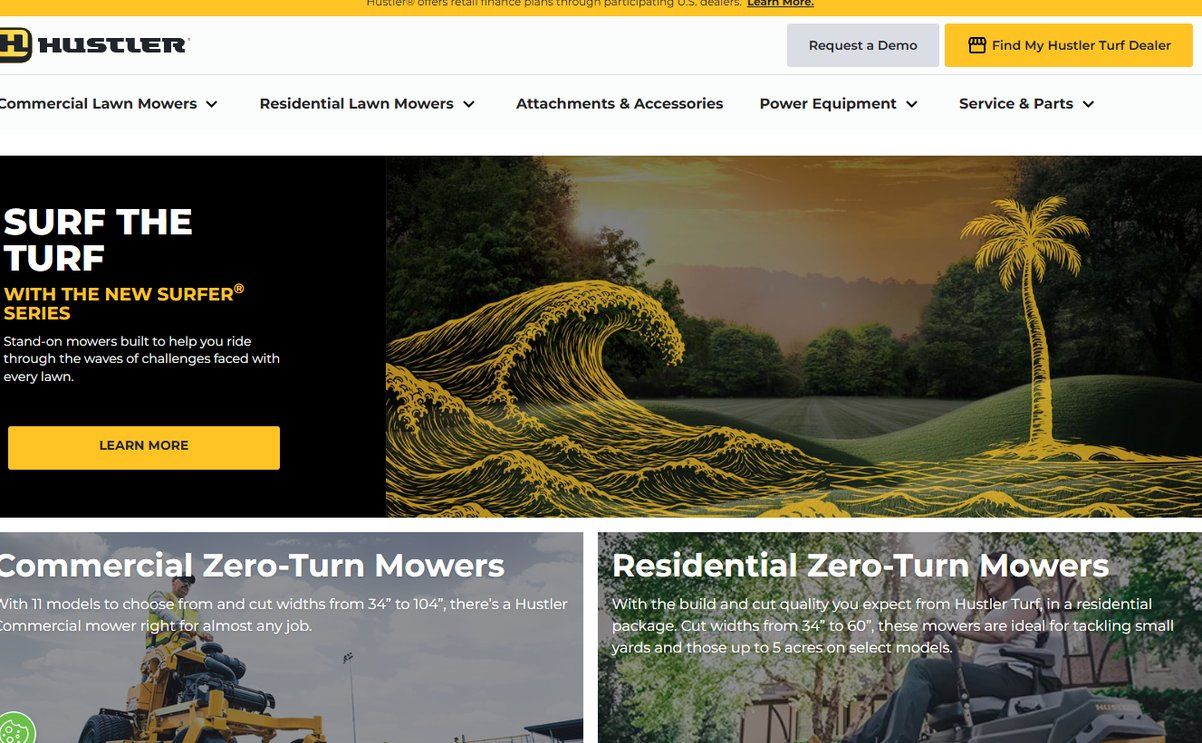
Hustler Turf is a name synonymous with reliability, and their financing reflects a commitment to long-term usability. They offer retail finance plans through their network of U.S. dealers, making the process feel integrated with the actual purchase of the machine. This “point of sale” experience is often much smoother than applying for a general loan.
The dealer and the lender work together to streamline the paperwork, which saves you a lot of headache. One of their standout features is the ability to secure 0% financing for up to 48 months. This is a game-changer for those who want to keep their cash flow steady while enjoying the latest Surfer Series or other high-performance zero-turn mowers.
By utilizing 0% interest, a business owner can take the money they would have spent on interest and instead reinvest it into marketing, fuel, or additional labor. This can significantly increase your Return on Investment (ROI). It turns interest savings into growth capital for your business.
Pros:
- Attractive 0% for 48 months financing option.
- Available through local participating U.S. dealers.
- Options for both residential and commercial models.
Cons:
- Terms are subject to dealer participation and credit.
4. Gravely
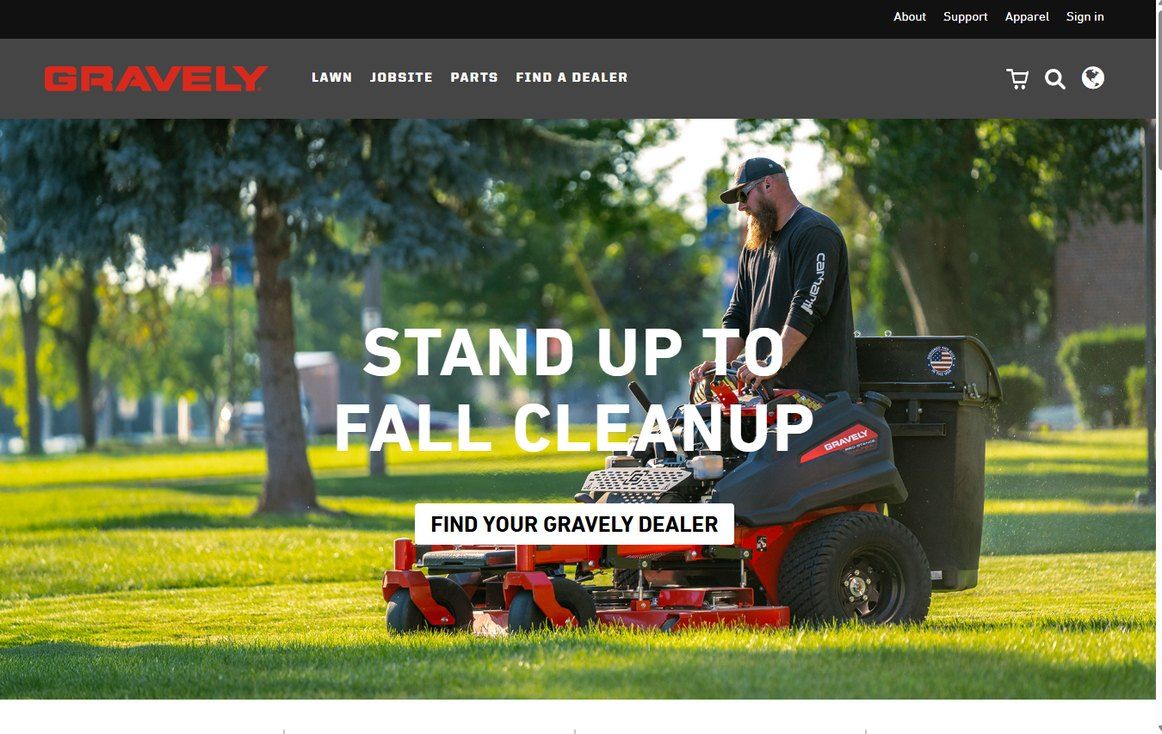
Gravely understands that sometimes you need to grow a fleet without a massive hit to your credit report. They offer specialized financing geared toward helping professionals reach their goals through flexible terms. This is particularly helpful for growing businesses in a “build phase” that might lack years of tax returns.
They provide options to prequalify online without impacting your credit score, which is a relief for many. This “soft pull” allows you to see what you qualify for before you commit to a dealership visit. It removes the guesswork and the fear of a hard inquiry on your report.
Furthermore, they cater to the professional side of the industry with fleet pricing programs that can offer up to 20% off the MSRP. This combination of easy qualification and significant discounts makes them a powerhouse for expanding commercial fleets. It is a smart way to add machines to your lineup.
Pros:
- Prequalification with no impact to credit score.
- Potential for 20% off via Fleet Pricing Program.
- Offers new no-credit-check financing options.
Cons:
- Fleet discounts require qualifying as a professional.
5. Exmark
Exmark is for the person who views their mower as a legendary piece of machinery. Their focus is on high-end, American-made craftsmanship, producing equipment built to last. When you buy an Exmark, you aren’t just buying a tool; you are buying a specialized machine designed to maximize uptime in demanding environments.
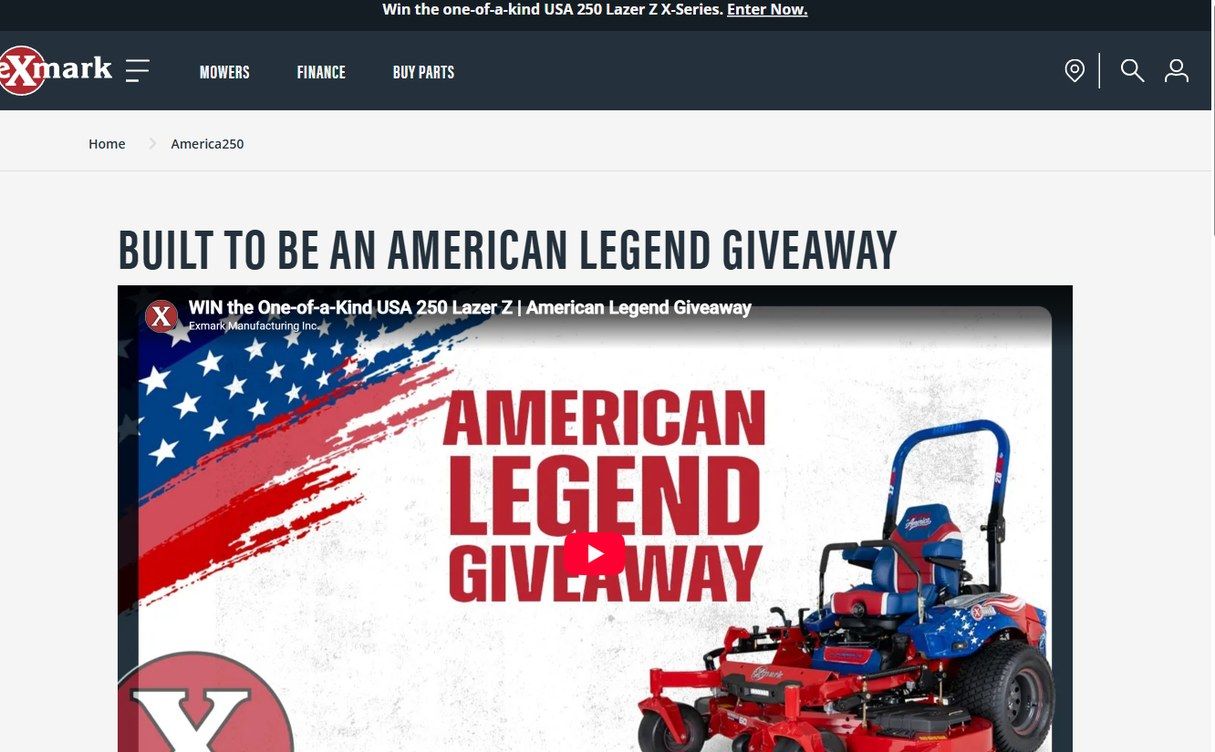
While they are famous for their custom, one-of-a-kind builds like the Lazer Z X-Series, their financing is geared toward those who want to own a premium piece of American engineering. It is a brand for those who refuse to compromise on quality. They cater to the high-end market of the industry.
For professionals who prioritize the “perfect cut” and the ability to work 10 hours a day without mechanical failure, the premium price is often offset by increased efficiency. You are paying for the peace of mind that comes with a machine that won’t quit on you mid-job.
Pros:
- High-quality, American-made legendary equipment.
- Exceptional craftsmanship and build quality.
- Strong brand reputation for durability.
Cons:
- Premium equipment often comes with a premium price tag.
Understanding Total Cost of Ownership (TCO)
Many buyers make the mistake of focusing solely on the monthly payment. However, the true cost of a mower includes much more than the loan installment. To properly budget, you must calculate the Total Cost of Ownership (TCO), which includes several critical components:
- Depreciation: Commercial mowers are assets that lose value. A zero-turn mower might lose 30-50% of its value in the first three years. You must ensure your financing term doesn’t exceed the useful life of the machine, or you could end up “underwater,” where you owe more than the mower is worth.
- Maintenance and Consumables: You must factor in the cost of annual oil changes, air filters, spark plugs, and especially the blades. High-performance commercial mowers require more frequent servicing than residential models.
- Fuel and Transport: For commercial operators, the cost of diesel or gasoline and the fuel required to haul a heavy trailer to a job site can add hundreds of dollars to your monthly operating expenses.
- Insurance: Financing a machine often requires you to carry comprehensive insurance to protect the lender’s interest, which is an additional monthly cost to account for.
Strategic Financing: When to Lease vs. When to Buy
A major decision for any landscaping professional is whether to use a traditional loan to purchase equipment outright or to enter into a lease agreement. Both have distinct advantages depending on your business model and tax situation. It is a choice between ownership and flexibility.
Traditional Financing (Ownership): When you finance a mower through a loan, you are working toward equity. Once the loan is paid off, you own the asset fully. This is ideal for companies that plan to keep their equipment for five years or longer. Ownership is often better for tax purposes if you prefer to take immediate depreciation deductions through Section 179 of the tax code, which allows you to deduct the full purchase price of qualifying equipment in the year it is placed in service.
Operating Leases (Usage): Leasing is often more beneficial for companies that want to stay on the cutting edge of technology. If you want a new, top-tier machine every three years to ensure maximum reliability and zero downtime, a lease may be more cost-effective. Leasing typically requires a lower upfront payment and offers lower monthly costs, but you do not own the equipment at the end of the term. This allows you to cycle out old, high-maintenance machines and bring in new, warrantied equipment, keeping your fleet modern and efficient.
Ultimately, the choice between a loan and a lease depends on your cash flow needs and your long-term strategy for equipment replacement.
Before signing your name on the dotted line, always read the fine print regarding interest rates and total cost of ownership. A low monthly payment might look enticing on paper, but if it stretches over several years, you could end up paying significantly more for the machine in the long run. Always compare the total amount repaid over the life of the loan against the cash price of the mower.
Avoid the trap of rushing into a “no credit check” deal without understanding the implications. While these can be lifesavers in an emergency, they often come with much higher interest rates that can bite you later. Always compare the total amount repaid over the life of the loan against the cash price of the mower.
Finally, ensure you are choosing the right type of loan for your specific situation. A commercial fleet owner has very different needs than a homeowner looking to tidy up a small yard. Matching the lender’s specialty to your specific equipment needs will save you headaches down the road.