

Top 5 Lenders for Tractor Financing in 2026: A Comparative Ranking
Last updated: 2026-11-09
Buying a new tractor is often the biggest financial hurdle a farm faces each season. It is not just about the sticker price on the window. You have to find a way to pay for that iron without breaking the bank or stalling your daily operations. A tractor is more than a tool; it is a capital asset that must generate enough revenue to justify its own existence.
If the financing is structured poorly, the machine that was meant to increase your productivity might instead become an anchor that drags down your entire operation. Whether you are a large-scale producer or a small hobbyist, the terms of your loan can make or break your cash flow. Choosing the right lender requires looking past the monthly payment.
You need to examine the long-term implications of your debt. Weigh the interest rates against the depreciation of the machine. Consider the flexibility of the repayment schedule and the potential for prepayment penalties. You don’t want to be stuck unable to settle the debt early when a good harvest season allows for extra liquidity.
- Farm Service Agency (USDA)
- JetzLoan
- John Deere Financial
- AgDirect
- Hustler Turf
How These Lenders Were Evaluated
The selection process focused on accessibility and the specific needs of agricultural workers. We looked at how easy it is to qualify, particularly for those with less-than-perfect credit histories. A lender that offers low interest rates is great, but if the application process takes months, it might be useless during harvest. If a machine failure requires an immediate replacement to save the crop, you need speed.
Speed of capital is just as important as the cost of capital. We also weighed the flexibility of terms against the total cost of ownership. We examined whether lenders allow for seasonal payment structures. You might want to pay less during planting and more after harvest, rather than facing rigid monthly schedules that can be brutal on cash-strapped operations.
Some lenders offer specialized programs for new farmers, while others focus on rapid approvals for used equipment. This ranking prioritizes those who offer the most balanced approach to debt. The goal is to ensure that the farmer remains the master of their own land.
| Lender Name | Loan Types | Credit Requirements | Terms & Speed |
|---|---|---|---|
| Farm Service Agency (USDA) | Farm Loan Programs | Lower credit requirements | Longer repayment terms |
| JetzLoan | See site | See site | See site |
| John Deere Financial | Compact & Utility | Low interest rates | Customized solutions |
| AgDirect | New & Used Ag Equipment | See site | 24/7 Online Application |
| Hustler Turf | Residential & Commercial | See site | Retail finance plans |
The Best Lenders for Tractor Financing
1. Farm Service Agency (USDA)
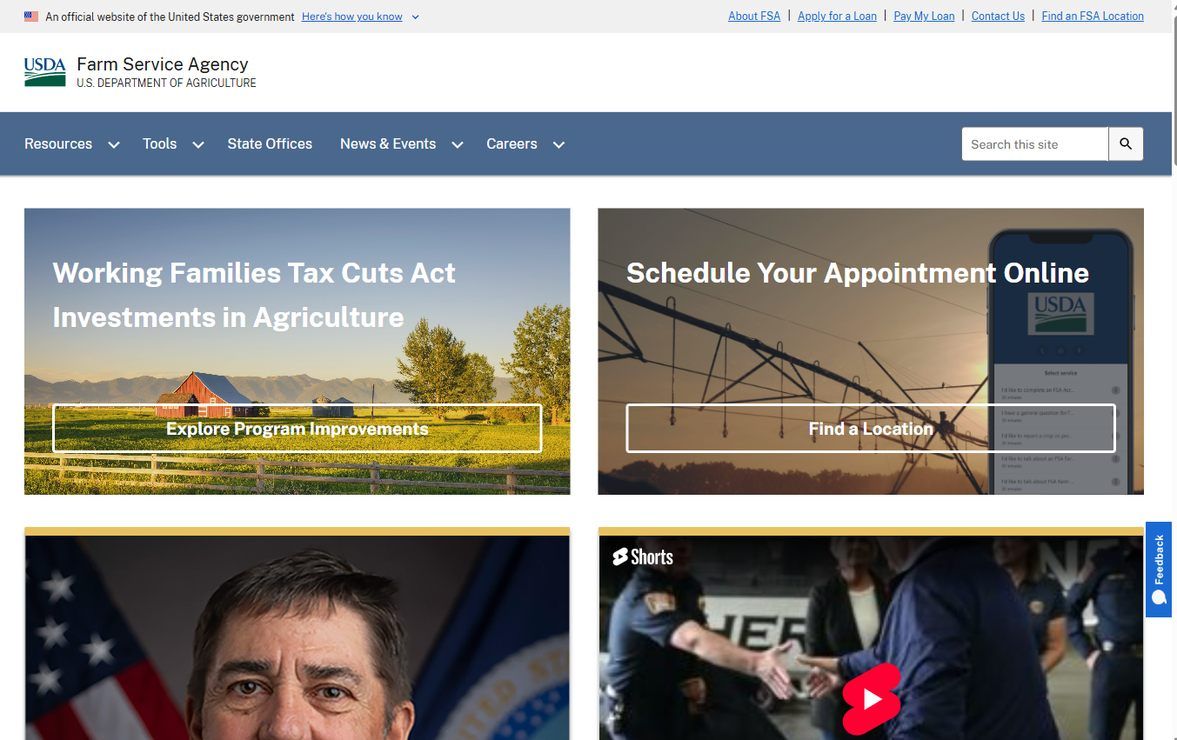
The Farm Service Agency acts as a pillar of support for the agricultural community. Because they are a government entity, they provide a safety net that private banks often refuse to offer. Their programs are designed specifically to help those who might struggle to find traditional financing, such as beginning farmers who lack significant collateral or established credit histories.
This is the premier choice for farmers seeking long-term stability. They offer lower interest rates and much higher overall loan amounts compared to many commercial lenders. If you need to keep your debt manageable over many years, this is the gold standard. Their loans can often be structured to cover not just the machinery, but also the necessary implements and even the working capital needed to get the season started.
The biggest advantage here is the accessibility for farmers with less-than-perfect credit. They understand the volatile nature of farming. A single weather event can impact your ability to make a payment, so they offer repayment terms that respect the seasonal nature of your income. It is a lifeline for those building a legacy from the ground up, providing a structured path to ownership that traditional lenders often view as too high-risk.
Pros:
- Lower interest rates than most private lenders
- Higher overall loan amounts available
- Longer repayment terms for better cash flow
- More lenient credit requirements for qualified applicants
Cons:
- Application processes can be more bureaucratic than private lenders
- May require significant documentation and time to finalize
2. JetzLoan
JetzLoan enters the arena as a specialized option for those looking for modern efficiency. They focus on getting equipment into the hands of operators without the endless red tape often associated with traditional banking. It is a streamlined approach for the modern era, where the opportunity to buy a machine can disappear in a matter of hours. (jetzloan.com)
This lender is particularly well-suited for those who need to move quickly to secure a specific piece of machinery. If a dealer has a one-time deal on a used unit or a sudden liquidation of a fleet, you cannot afford to wait weeks for a decision from a regional bank. They fill that gap in the market by providing rapid decisions that allow you to act when the market is right.
However, because they operate with such speed, you must be diligent about understanding the fine print. The convenience of their service is a massive benefit, but speed should never come at the cost of reading every single clause in your contract. You should specifically look for any “origination fees” or “early exit” penalties that might be baked into a fast-tracked loan agreement.
Pros:
- High speed of approval and funding
- Streamlined digital application process
- Ideal for quick equipment acquisitions
Cons:
- Terms may be less flexible than government programs
- Interest rates may vary based on speed of funding
3. John Deere Financial
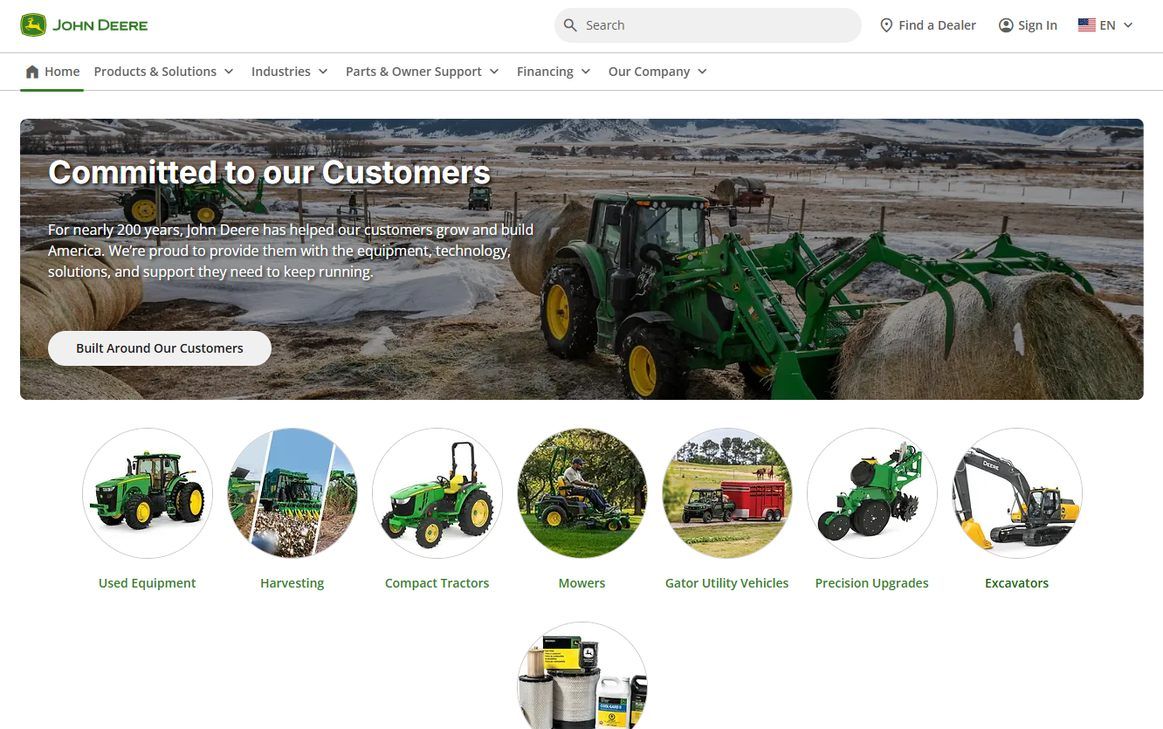
John Deere Financial is a powerhouse built around the specific needs of equipment owners. Since they are tied to the brand, their financing is deeply integrated with the actual machinery you are buying. They offer customized solutions that feel tailored to your specific operation. Their underwriting teams understand the resale value and utility of Deere equipment better than a generalist bank.
For those looking at compact or utility tractors, their specialized financing is hard to beat. They offer low interest rates and programs designed to help your operation succeed from day one. This might include seasonal payment plans that align with your cash flow or lease-to-own options that allow you to upgrade your fleet as your farm grows. It is a seamless experience from the showroom floor to the field.
They provide a level of certainty that is hard to find elsewhere. When you buy through them, you are working with a company that understands the utility of the machine you are driving. They know that a tractor isn’t just a purchase; it is the engine of your livelihood. This brand-specific knowledge translates into more intuitive loan structures for those sticking within the ecosystem.
Pros:
- Low interest rates on specific models
- Customized financing for compact and utility tractors
- Deeply integrated with the dealership experience
Cons:
- Financing is often tied strictly to their own equipment
- May have stricter requirements for non-Deere brands
4. AgDirect
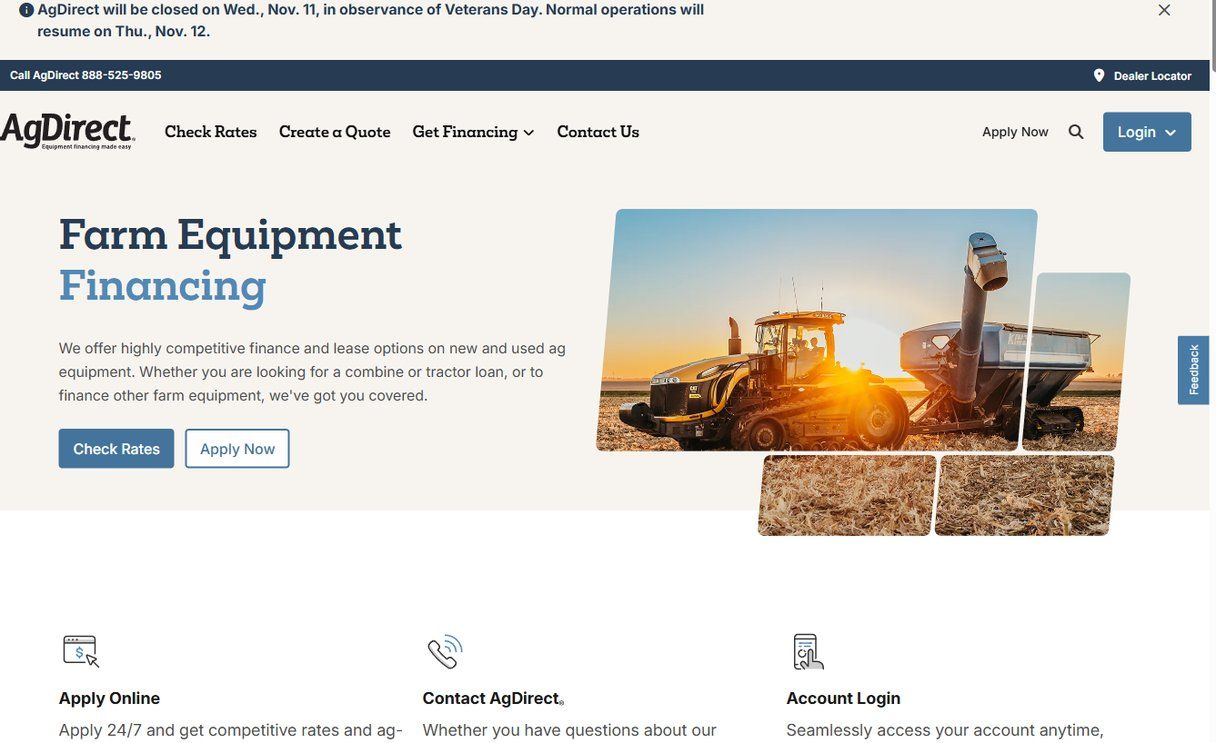
AgDirect provides a versatile middle ground for farmers who want flexibility. They cover everything from massive combines to small tractors, and they are equally comfortable with new equipment as they are with used machinery. This makes them a one-stop shop for many, especially those who don’t want to deal with the restrictions of manufacturer-only financing.
One of their greatest strengths is the ability to finance through various channels. You can buy from a dealer, at an auction, or even from a private party. This level of freedom is rare in the world of agricultural lending. If you find a great deal on a used tractor from a neighbor, AgDirect is much more likely to help you secure the funds than a traditional dealer-based finance company.
The ability to apply online 24/7 means you can keep working on the farm and handle your business in the evening. They offer competitive rates and ag-friendly terms that acknowledge the realities of the farming lifestyle. This includes the need for quick responses and the ability to manage finances remotely from the field.
Pros:
- Extremely flexible: covers auctions and private sales
- 24/7 online application process
- Competitive rates for both new and used equipment
Cons:
- Competitive rates may still require decent credit
- Complexity can increase with private party sales
5. Hustler Turf
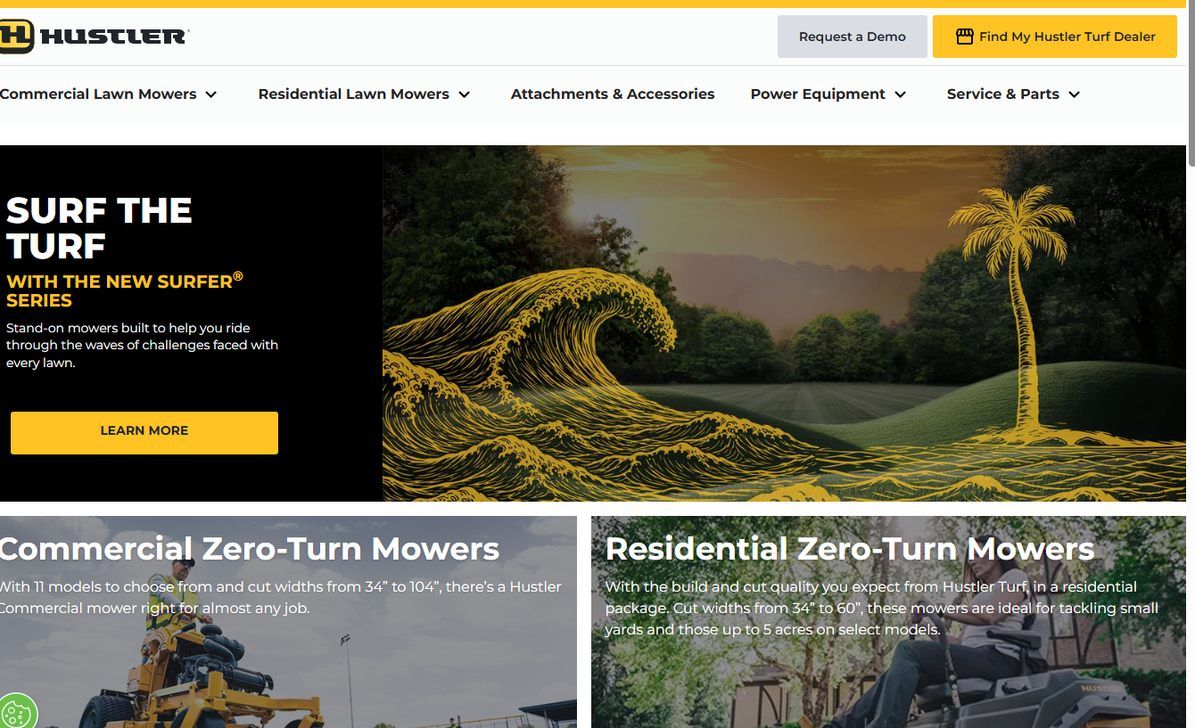
Hustler Turf is the go-to option for those managing smaller plots or commercial landscaping businesses. Their financing is aimed at the professional who needs high-quality mowers and power equipment without a massive upfront capital outlay. This is less about the heavy tillage and more about the precision work of maintenance and landscaping.
They offer retail finance plans through their participating U.S. dealers. This makes it incredibly easy to walk into a shop and walk out with a zero-turn mower that will last for years. Their focus is on the reliability of the machine and the ease of the purchase. This makes them a favorite for small business owners who need to scale their equipment fleet quickly.
Whether you are a residential user or a commercial contractor, they have a package that fits. It is a straightforward, no-nonsense approach to equipment ownership for those who prioritize uptime and durability. For a landscaper, a broken mower means a lost contract; Hustler’s financing is designed to get you back to work quickly.
Pros:
- Retail finance plans through local dealers
- Tailored options for commercial and residential users
- Focused on high-quality, durable equipment
Cons:
- Limited to specific brands and types of equipment
- Not intended for large-scale heavy agricultural machinery
Comparing Financing Strategies: Lease vs. Buy
Deciding how to pay for your tractor involves a critical choice: do you lease it or do you buy it outright with a loan? This decision can impact your tax liability and your balance sheet for years to come.
| Feature | Financing (Loan) | Leasing |
|---|---|---|
| Ownership | You own the asset from day one. | You are essentially renting for a set term. |
| Tax Implications | Depreciation and interest are deductible. | Lease payments are often fully deductible as business expenses. |
| Long-term Cost | Usually cheaper total cost over the life of the machine. | Higher cost due to interest and administrative fees. |
| Flexibility | You can sell the machine whenever you want. | You must return the machine or buy it out at the end. |
How to Choose Your Best Path Forward
Choosing a lender is not just about the lowest number on a piece of paper. You must look at your long-term cash flow. A low monthly payment with a thirty-year term might sound great now, but you will end up paying much more for the tractor in the long run because of the compounding interest. A 60-month loan with a higher payment might be much more economical over the decade.
Avoid the mistake of rushing into a deal just because a dealer is pushing a specific monthly payment. Salespeople are incentivized to move inventory, not necessarily to protect your bottom line. Always ask for the total cost of the loan, including all interest and fees. It is easy to get blinded by the shiny paint of a new machine and forget the reality of the debt that accompanies it.
Check your credit score before you start the process. If your credit is not where it needs to be, focus on the USDA or specialized vendors first. Trying to secure a high-interest loan from a traditional bank with bad credit is a recipe for a financial headache that could haunt your farm for years. Preparation is the key to securing the best possible terms for your operation.