

Top 5 Lenders for No Credit Check Home Improvement Loans in 2026
Last updated: 2026-11-09
Trying to fund a kitchen remodel or a new roof when your credit score is a mess feels like swimming upstream. You want to fix the house, but banks often slam the door before you even get a seat at the table. The frustration isn’t just about the lack of funds; it is about the lack of options.
When a pipe bursts behind a wall or the shingles begin to curl, you aren’t looking for a lecture on your debt-to-income ratio. You are looking for capital. Sometimes, the standard banking system just doesn’t work for everyone’s timeline or financial history.
This list focuses on finding paths forward for those who need renovation capital without the immediate dread of a hard credit inquiry. We have looked at various options to see which providers offer the most flexibility for homeowners in different financial situations. Whether you have a “thin” credit file or a “bruised” one, there are specialized mechanisms designed to bypass the standard, rigid requirements of big-box institutional lending.
- JetzLoan
- Trident Home Loans
- SoFi
- Tower Loan
- LoanStart
How We Evaluated Home Renovation Financing Options
To make sense of this crowded market, we looked at how different lenders approach creditworthiness. Some providers focus on high-speed digital approvals, while others specialize in navigating complex mortgage structures or using your home equity as a primary safety net. We didn’t just look at interest rates, because a low rate is meaningless if the lender’s approval process takes three months and your kitchen is currently unusable.
We analyzed the specific product offerings of each company, looking for anything that might help a borrower bypass traditional, rigid scoring systems. We categorized them based on three primary metrics: speed of funding, ease of application, and the level of scrutiny applied to credit history. Our goal was to identify who provides real assistance versus those who just offer more of the same old paperwork.
We specifically looked for “soft-pull” options—where you can see your potential terms without a hard inquiry hitting your report—and lenders that prioritize the purpose of the loan over a perfect 800 score. This helps prevent a situation where you are hunting for money but accidentally damaging your credit in the process.
| Lender Name | Loan Amounts | Credit Impact | Primary Focus |
|---|---|---|---|
| JetzLoan | see site | see site | see site |
| Trident Home Loans | see site | see site | Home buying & refinancing |
| SoFi | see site | see site | Banking & Personal Loans |
| Tower Loan | see site | see site | Installment & Emergency Loans |
| LoanStart | Up to $40,000 | No impact to score | Personal Loans |
The Best Lenders for Home Improvements
1. JetzLoan
This lender enters the ring as a specialized option for those looking for quick movement. When you need to fix a leak or update a room without waiting weeks for a bank’s committee to meet, speed is the name of the game. Traditional mortgage-backed renovation loans, like FHA 203k, often require extensive appraisals, structural inspections, and weeks of underwriting. JetzLoan is designed to circumvent that specific bottleneck.
It is built for the modern homeowner who wants to skip the red tape. If your situation requires immediate attention—such as an HVAC failure during a heatwave or a sudden roof leak—and you are wary of the traditional lending hurdles that prioritize long-term stability over immediate necessity, this is worth a look. Their digital-first approach means you spend less time on the phone and more time choosing paint colors.
Pros:
- Fast processing for urgent needs
- Streamlined digital experience
Cons:
- Limited specific data on term flexibility
2. Trident Home Loans
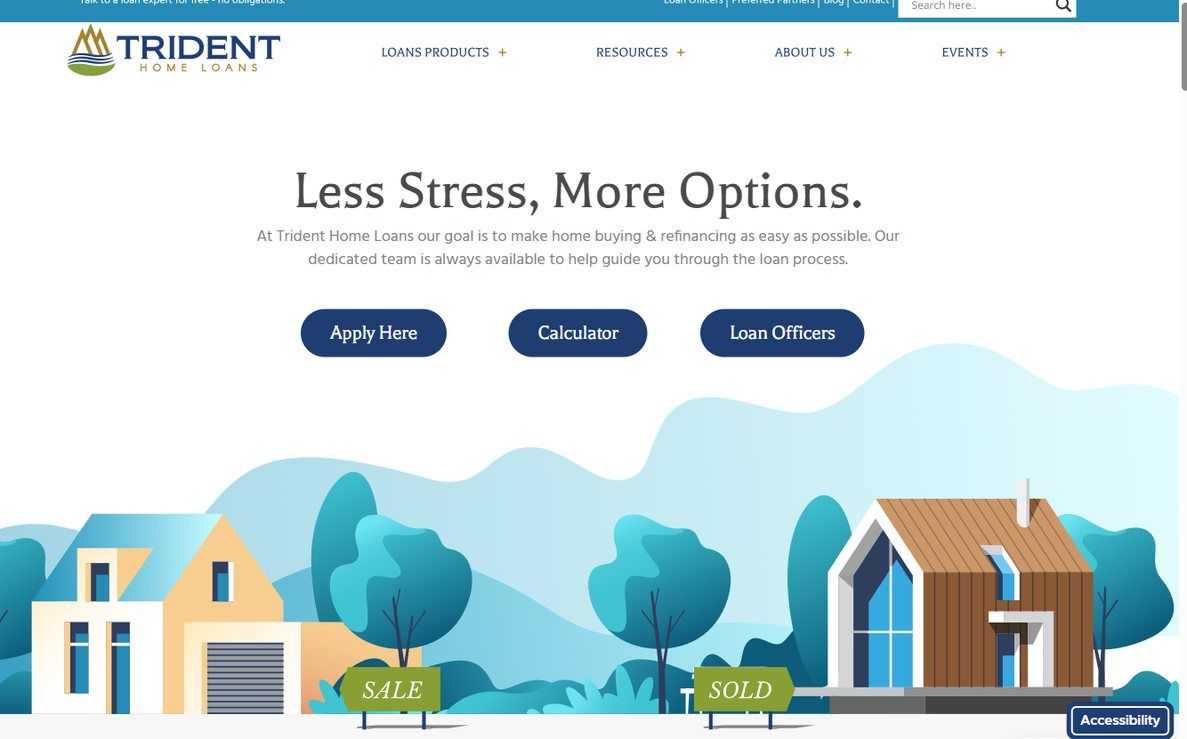
Trident approaches the problem from a more holistic perspective. Rather than just handing over a check, they focus on guiding you through the entire journey of owning and maintaining a home. While many lenders view a loan as a transaction, Trident views it as a component of a broader property management strategy.
They offer solutions ranging from standard mortgages to refinancing. This makes them a strong choice if your home improvement project is tied to your long-term plan to refinance your primary residence. For example, if you plan to renovate a basement to increase your home’s appraised value, which in turn allows you to refinance into a better rate, Trident’s expertise in mortgage structures becomes an invaluable asset.
They help you bridge the gap between “fixing the house” and “building equity.” It is a strategy that looks at the big picture rather than just the immediate repair. This is particularly useful for homeowners who are thinking about their net worth and long-term stability.
Pros:
- Dedicated team for guidance
- Focus on mortgage and refinance solutions
- Helpful for long-term home planning
Cons:
- More complex than a simple installment loan
3. SoFi

SoFi is a massive player in the financial ecosystem, offering everything from high-yield savings to specialized banking products. They are the “one-stop shop” for people who want their finances under one roof. Because they are a major fintech entity, their algorithms are highly sophisticated, often looking at much more than just a single FICO score.
Their platform is sleek and designed for the tech-savvy user. They often utilize alternative data to assess creditworthiness, which can include looking at your employment history, income stability, and even your education or professional background. This can be a game-changer if your credit score is currently in a slump due to something temporary.
If you are looking for a lender that integrates well with your existing banking and investment life, and you have a steady income but perhaps a recent dip in your credit score due to high utilization, they are a formidable contender. It is a modern way to handle money without the old-school friction.
Pros:
- Comprehensive financial suite
- Highly digital-friendly interface
- Wide variety of financial products
Cons:
- Standard banking requirements apply
4. Tower Loan

Tower Loan is a veteran in the space, offering a variety of installment and emergency loans. They are built for the moments when life throws a curveball and you need cash quickly to keep things running. Unlike the pure-digital fintechs, Tower has a physical presence in many communities, which can be a significant advantage for those who prefer speaking to a human being face-to-face regarding their financial situation.
They cater to a wide range of needs, from vacation funds to debt consolidation. For a homeowner facing an unexpected repair, their installment loan structure provides a clear path to repayment through predictable, scheduled payments. This helps people stay on track without constant guesswork.
This is particularly helpful for those on a strict monthly budget who need to know exactly how much will be leaving their account each month to prevent future financial stress. It removes the mystery from your monthly obligations.
Pros:
- Diverse loan types available
- Option for installment-based repayment
- Established presence in multiple states
Cons:
- Traditional lending models can be rigid
5. LoanStart

LoanStart acts as a bridge to the wider lending market. Instead of being just one bank, they use a network of partners to find the best fit for your specific, individual needs. Think of them as a specialized broker that scans the horizon for lenders whose criteria match your specific profile.
They are particularly useful for those who have been told “no” by traditional banks or credit unions. Their service is designed to be painless, often allowing you to check eligibility without hurting your score. This is a critical feature for homeowners who are “shopping around.”
You can test the waters with multiple lenders via LoanStart’s network before committing to a hard inquiry that could further impact your score. It is a way to explore your options without playing a dangerous game with your credit rating.
Pros:
- Potential for loans up to $40,000
- No impact to your credit score during check
- Connects you to a wide network of lenders
Cons:
- You are being paired with an affiliate
Understanding the Cost of Capital: Interest vs. Equity
When choosing between these lenders, you must understand the fundamental trade-off between the cost of interest and the use of your home’s equity. This is the most critical decision in the renovation financing process. You have to weigh the immediate cost against the long-term risk.
Personal loans, like those offered by SoFi or LoanStart, are typically unsecured. This means you aren’t putting your house on the line as collateral. The advantage is that if you hit a major financial hardship, the lender cannot immediately foreclose on your home to satisfy the debt. The disadvantage is that because the lender is taking more risk, the interest rates are generally higher. You are paying a premium for the flexibility and the lack of collateral.
On the other hand, mortgage-based solutions, like those discussed with Trident, are secured by your property. This usually results in much lower interest rates and much longer repayment terms—sometimes stretching over 15 or 30 years. However, the stakes are significantly higher. If you cannot meet the payments, your home is the security.
When deciding which route to take, ask yourself: “Is this repair a luxury upgrade (like a new backsplash) or a structural necessity (like a foundation fix)?” Luxury upgrades are often better suited for unsecured personal loans, while major structural renovations are often better handled through mortgage-based equity products. Choose the tool that matches the job.
A Step-by-Step Guide to Preparing for Your Loan Application
Regardless of which lender you choose, the “preparation phase” is where most homeowners fail. Moving from a “maybe” to a “yes” requires organization. Follow these steps to maximize your chances of approval and secure the best possible terms:
- Audit Your Project Scope: Do not go to a lender with a vague idea like “I need $20,000 for a kitchen.” Go with a detailed quote from a licensed contractor. Lenders are more likely to approve a loan when they see that the funds are tied to a specific, documented project rather than a nebulous sum of money.
- Organize Your Financial Paperwork: Even with “no credit check” options, lenders will eventually want to see proof of income. Have your last two years of tax returns, your last three months of pay stubs, and your most recent bank statements ready in a single digital folder.
- Check Your Errors: Before applying, pull your own credit report for free. It is much easier to dispute a $50 error that is dragging your score down by 30 points *before* you apply for a loan than it is to try and fix it after a lender has already declined you.
- Determine Your “Hard Stop” Number: Before you see your first interest rate, decide on the maximum monthly payment you can afford without sacrificing groceries or utilities. Having this number in mind prevents you from being swayed by a “low monthly payment” that actually hides a massive total interest cost over the life of the loan.
Avoiding Common Pitfalls in Renovation Financing
Before you sign on the dotted line, make sure you have a clear picture of what a project will actually cost. It is incredibly easy to underestimate the price of materials or the cost of labor. A loan that seems manageable on paper can become a weight around your neck if the project scope creeps.
For example, if you find out once the walls are open that your electrical wiring needs a complete overhaul, that $15,000 loan suddenly becomes a $25,000 problem. Always assume there will be surprises once the renovation begins. Having a buffer is not a luxury; it is a necessity.
Don’t fall into the trap of borrowing more than you can realistically repay. Even with “no credit check” options, the interest rates can be higher than traditional routes. Always look at the total cost of the loan, not just the monthly payment. A $10,000 loan with a $200 monthly payment sounds great, but if the term is seven years, you might end up paying back nearly $17,000. Always calculate the Total Cost of Ownership (TCO) for your debt.
Lastly, remember that every financial move has a consequence. While some services allow you to check rates without affecting your score, eventually, a hard inquiry is usually inevitable when you move from “checking” to “accepting.” Plan your finances carefully so that the house you are fixing up doesn’t become a financial burden. A renovated kitchen adds value, but only if the cost of the loan doesn’t outweigh the equity gained by the improvement.