

The Best Land Loans for Bad Credit Options in 2026
Last updated: 2026-11-09
Owning a piece of the earth is a dream for many, but the price tag often feels like a mountain. If your credit score isn’t exactly where you want it to be, traditional banks might slam the door before you even finish your application. It is a frustrating reality for many aspiring landowners.
For the average consumer, a 700+ FICO score is often the “golden ticket” to mortgage approval. In the world of raw land, however, the rules change completely. Unlike residential real estate, where the home itself acts as significant collateral, land is perceived by traditional lenders as a much higher risk.
If a borrower defaults on a house, the bank can sell it to recover their money fairly quickly. A vacant lot is a different story. It is much harder for a lender to sell a patch of dirt to recoup a loss, which is why they are so picky about who they lend to.
This list is for those looking to navigate the tricky waters of unconventional financing. We focus on paths that prioritize the land itself or alternative lending models over a perfect FICO score. Choosing the right partner depends on whether you need immediate owner financing or a specialized construction loan.
Understanding the distinction between these paths is vital. Owner financing is essentially a private contract between you and the seller. Specialized lending involves professional firms that have built specific underwriting models to accommodate non-traditional profiles.
- Classic Country Land
- JetzLoan
- Acorn Finance
- LightStream
How We Evaluated These Land Financing Options
Evaluating these providers requires looking past the glossy marketing. We analyzed how each entity handles the specific reality of a low credit score. Some lenders focus on the physical property, while others act as intermediaries to connect borrowers with specialized lenders who are more willing to take a chance.
We didn’t just look at interest rates. We looked at the “barrier to entry”—how much effort, documentation, and upfront cash is required before you even know if you’re approved. You shouldn’t have to jump through endless hoops just to get a simple answer.
The criteria focused on accessibility, the ease of the application process, and the specific type of land acquisition they support. We looked for transparency regarding down payments and the necessity of bank approval. We specifically scrutinized the difference between “hard money” loans, which are fast but expensive, and “owner financing,” which can be more flexible but requires meticulous legal review.
The goal was to identify who actually makes it possible to own land when the big banks say no.
| Lender Name | Down Payment | Credit Requirements | Key Feature |
|---|---|---|---|
| Classic Country Land | $999 | No credit check | Owner financing |
| JetzLoan | see site | see site | see site |
| Acorn Finance | see site | Good & Bad credit | $0 dealer fees |
| LightStream | see site | see site | Loans for practically anything |
Top Ranked Land Financing Providers for 2026
1. Classic Country Land
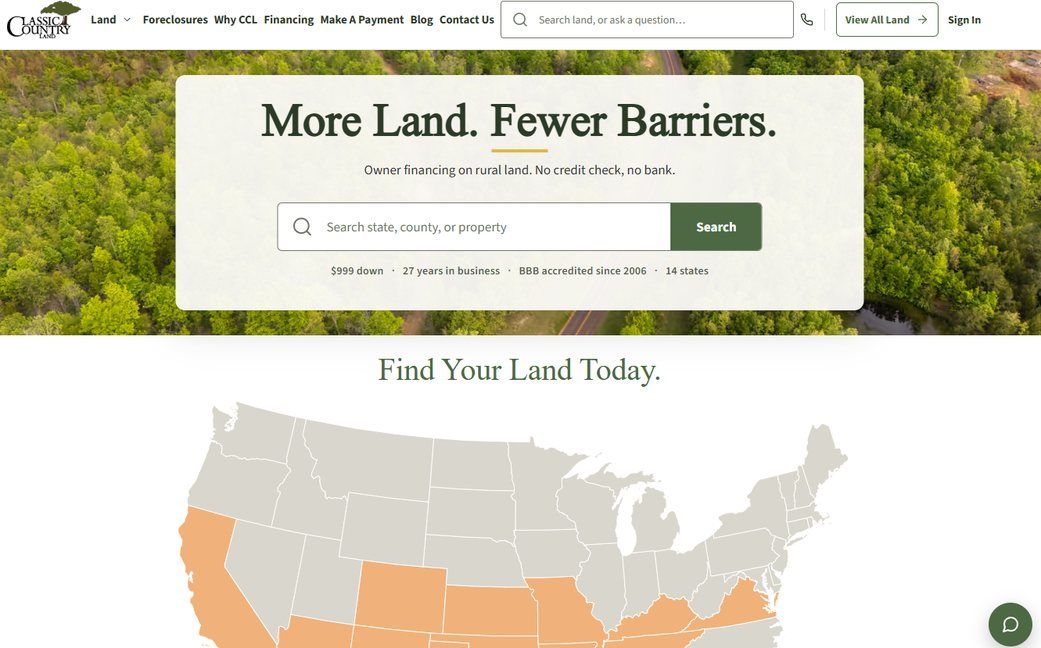
If you want to bypass the bureaucracy of a traditional bank, this is a standout option. They specialize in rural land with owner financing. This means you are dealing directly with the seller rather than a faceless institution. It removes the heavy weight of a credit check from the equation entirely.
This model works because the seller has a vested interest in seeing the property improved. Improving the land increases the value of their asset. Instead of a bank’s strict algorithmic decision, you are often negotiating with a human being who understands the value of the acreage.
This is a perfect fit for someone who has a bit of cash for a down payment but lacks the credit history to satisfy a mortgage lender. Perhaps you have a stable income but a history of medical debt. Maybe you are self-employed and struggle to show the two years of tax returns traditional lenders demand.
With 27 years in business, they have carved out a niche for those who simply want to own a piece of the country without the red tape. Their structured approach to rural land makes the transition from “dreamer” to “landowner” much more attainable for the working class.
Pros:- No credit check required for financing.
- Low entry point with $999 down.
- Direct owner financing simplifies the process.
- Limited to specific states with inventory.
- Not a traditional bank-backed loan.
2. JetzLoan
JetzLoan works as a modern way to find specific financial products. They aim to streamline the connection between the borrower and the capital needed to move projects forward. Rather than being a single-purpose lender, they function as a sophisticated conduit.
They match your specific financial profile with the lender most likely to approve it. This saves the borrower from the “application fatigue” that comes from being rejected by ten different banks in a single week. It is a way to stop guessing which bank might say yes.
This option is suited for the proactive borrower who wants to explore various lending avenues without wasting months on dead ends. If you are looking at a property that requires a quick close—perhaps an auction or a private sale where the seller wants cash within 30 days—this type of streamlined matchmaking is invaluable.
It is a tool for those who understand that the right match is more important than a single, immediate answer from a traditional lender. They specialize in reducing the friction between “I found it” and “I own it.”
Pros:- Modern, streamlined approach to lending.
- Provides alternative paths for borrowers.
- Requires more research to understand specific terms.
- Not a direct land seller.
3. Acorn Finance
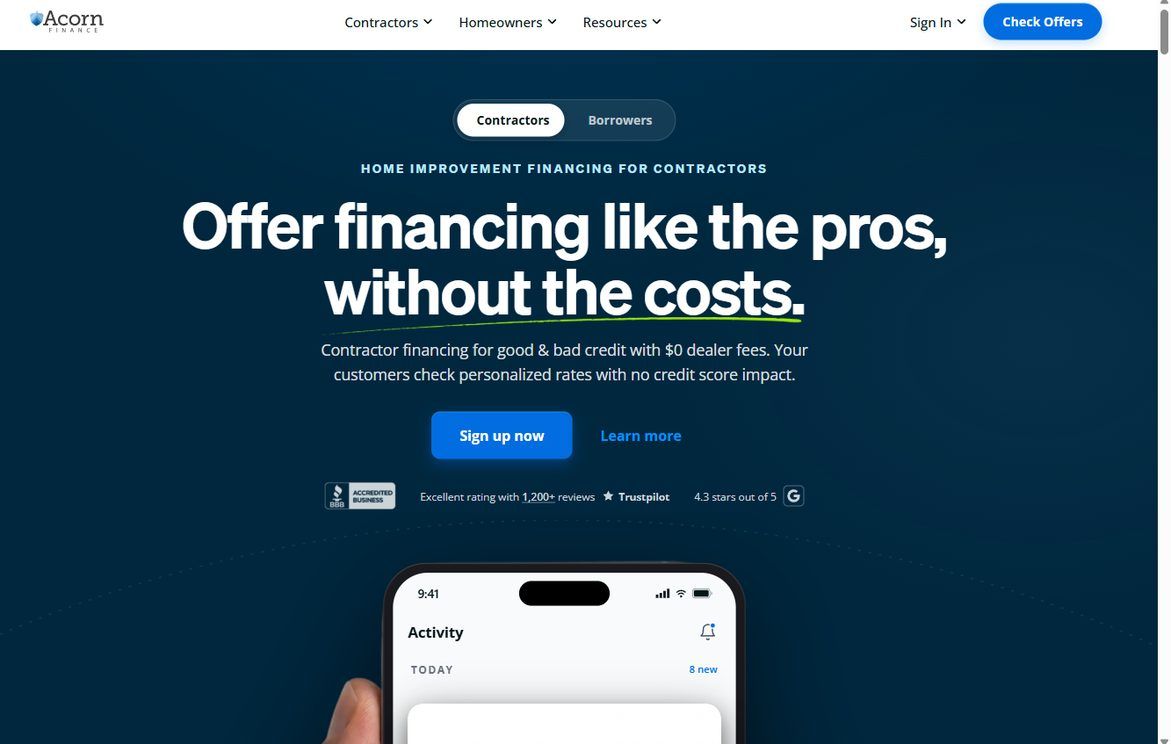
Acorn Finance acts as a marketplace that brings multiple options to your fingertips. They focus on home improvement and contractor financing. This can be vital if your land purchase requires immediate site preparation or utility installation.
Many people forget that “buying land” is only the first step. The second step is making it habitable. You may need to install a septic system, build a driveway, or clear a building pad immediately upon purchase. Acorn Finance bridges that gap by connecting you with specialized financing for these essential capital improvements.
If you are looking to renovate or improve a site you already own, this is a strong contender. They emphasize that checking your personalized rates will not impact your credit score. This is a massive relief for someone trying to protect their fragile financial standing.
In the world of credit, every “hard inquiry” can drop your score by a few points. Using a marketplace that offers soft pulls allows you to shop around and compare interest rates and terms without the risk of damaging your ability to qualify for a mortgage later.
Pros:- No credit score impact during the rate check.
- $0 dealer fees for the borrower.
- High user satisfaction ratings.
- More focused on improvements than raw land purchase.
- Relies on a network of third-party lenders.
4. LightStream
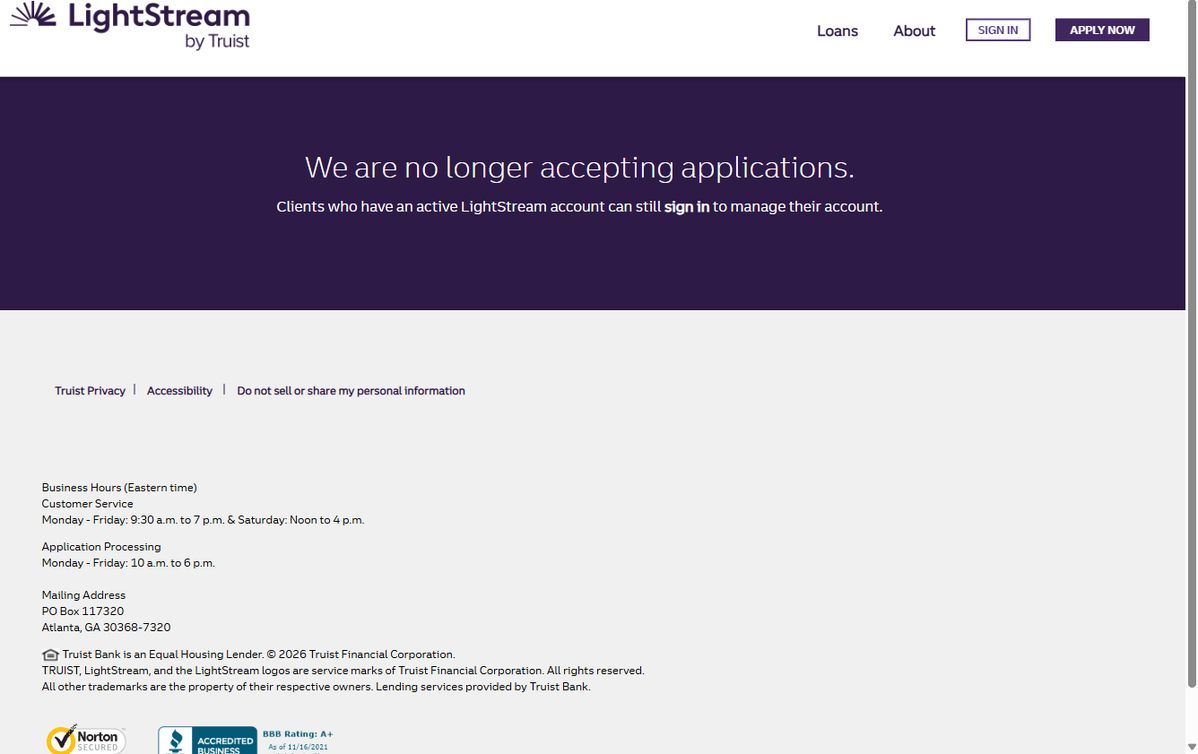
LightStream operates on a different level, offering loans for “practically anything.” While they are a major name under the Truist umbrella, they are often sought out for their ability to handle various personal and specialized loan needs. They are a heavyweight in the lending industry.
They are known for their competitive rates and highly efficient digital application processes. For those with a solid income but perhaps a lack of traditional collateral, a personal loan from a major player can provide the liquidity needed to secure a land deal quickly.
However, there is a significant catch for those in the “bad credit” category. They are a highly structured lender. While they offer flexibility in loan purpose, they are not a “no credit check” entity. Their underwriting is rigorous, looking at debt-to-income ratios and overall creditworthiness with high precision.
This is best for the borrower whose credit is improving or who has high income to offset risk. If you have a high-paying job but a low credit score due to past mistakes, LightStream might be the bridge that helps you secure the land now while you work on your long-term financial health.
Pros:- Extensive loan purposes and flexibility.
- Backing of a major financial institution.
- Efficient application processing.
- Not ideal for those with severely damaged credit.
- Currently not accepting new applications in all categories.
Understanding the Total Cost of Ownership
When you move from renting or living in a suburban home to owning raw land, your financial mindset must shift from “monthly payment” to “total investment.” Many first-time landowners make the mistake of thinking that because the land is cheap, the lifestyle will be cheap. This is rarely the case.
To successfully manage your financing, you must understand the three pillars of land costs: acquisition, preparation, and maintenance. Acquisition is what your loan covers. Preparation is what your personal savings must cover. Maintenance is what your monthly budget must account for.
For example, if you use a low-down-payment option like Classic Country Land, your monthly payment might be manageable. But if that land requires a $15,000 well installation before you can even drink water, your initial budget is immediately blown. You must approach land ownership with a “buffer fund”—typically 15-20% of the land’s value—set aside specifically for the unforeseen costs of making the land functional.
Consider this comparison of two potential land scenarios:
| Expense Category | Scenario A: Ready-to-Build Lot | Scenario B: Raw Unimproved Land |
|---|---|---|
| Initial Down Payment | Higher (often 20-30%) | Lower (can be as low as $999) |
| Immediate Utility Costs | Minimal (grid connection exists) | High (well, septic, power pole) |
| Access Costs | Low (paved or graded road) | High (clearing, gravel, driveway) |
| Risk Level | Low | High |
Due Diligence Checklist for Unconventional Loans
Because unconventional loans often bypass the standard scrutiny of major banks, the burden of due diligence shifts heavily onto you, the borrower. When you are dealing with owner financing or private lenders, you are essentially acting as your own risk manager. Before any money changes hands, you must verify several critical factors to ensure you aren’t buying a liability instead of an asset.
First, address the “Title” issue. Never, under any circumstances, hand over a down payment without a title search. A title search ensures that the seller actually owns the land and that there are no liens or “encumbrances” on the property. An encumbrance could be an unpaid tax bill, a utility easement, or a previous owner’s unpaid loan.
If you buy land with a clouded title, you may find yourself legally responsible for someone else’s debt. Second, investigate the “Zoning and Easements.” You might find a beautiful five-acre lot that is zoned strictly for agricultural use, meaning you cannot build a residential house on it. Or, you might find that a utility company has an easement running right through the center of your plot.
Always call the county planning and zoning department with the parcel number in hand to confirm exactly what you are allowed to do on that specific piece of dirt. Third, review the “Prepayment Terms.” This is a critical aspect of owner financing. If you find yourself with extra cash in a few years and want to pay off the land to own it free and clear, some sellers will penalize you for doing so.
They want to collect the interest over the full term of the loan. Ensure your contract explicitly states that there are no prepayment penalties, allowing you to build equity as quickly as your finances allow. Lastly, always confirm the legal status of the land. Ensure the seller has a clear title and that there are no zoning restrictions that prevent you from building your dream home. A bad loan is a headache, but a bad piece of land is a permanent problem.