

The 6 Best Lenders for First Time Personal Loans with No Credit History in 2026
Last updated: 2026-11-09
Walking into a bank without a credit score feels like trying to enter a VIP club without an invitation. You know you have the funds, but the gatekeepers demand a history you simply haven’t built yet. It is a frustrating paradox that leaves many people stuck in a financial limbo.
You might have been working a steady job for three years, or perhaps you just moved to the country. To a traditional scoring algorithm, however, you are essentially invisible. This lack of data creates a barrier that makes even the most responsible individuals feel judged for a “crime” they haven’t committed: having a blank slate.
This list focuses on finding paths around those traditional barriers. We searched for lenders that prioritize your current income and banking stability over a dusty, empty credit report. Finding the right match requires looking past standard requirements to see who actually values your potential.
Instead of looking at where you have been, these lenders look at where you are going. They focus on your ability to repay through consistent cash flow rather than a three-digit number assigned by a bureau.
- Elite Personal Finance
- FastLendGo
- PayPal
- World Finance
- Discover
- OneMain Financial
How These Lenders Were Evaluated for New Borrowers
The selection process involved looking at how each lender treats applicants who are starting from zero. We looked for those who offer quick decisions and don’t immediately shut the door when a credit report comes back blank. It is about finding a doorway rather than a brick wall.
For a newcomer, a “hard inquiry” on a credit report can feel like a permanent scar. Because of that, we sought out lenders that prioritize soft pulls or alternative data points to assess risk. We specifically prioritized lenders that offer transparency regarding their terms and interest rates.
Since first-time borrowers often face higher risks, knowing the actual costs upfront is vital. We evaluated them based on loan amounts, speed of funding, and the specific requirements for those with limited history. We also looked at the accessibility of support.
Can a borrower resolve an issue via a mobile app at midnight, or do they need to walk into a physical branch to speak with a loan officer? Understanding this distinction is critical when you are navigating the complexities of your first debt agreement.
| Lender Name | Loan Amounts | Interest Rates (APR) | Funding Speed | Credit Requirement |
|---|---|---|---|---|
| Elite Personal Finance | Up to $5,000 | 15% to 20% (Bad) | 5 Minutes | 400 – 500 Score |
| FastLendGo | See site | See site | Quick access | No credit history options |
| PayPal | See site | See site | See site | See site |
| World Finance | See site | See site | See site | See site |
| Discover | See site | See site | See site | See site |
| OneMain Financial | $1,500 – $35,000 | Starting at 11.99% | As soon as 1 hour | See site |
Top Rated Lenders for Building Credit and Funding Needs
1. Elite Personal Finance
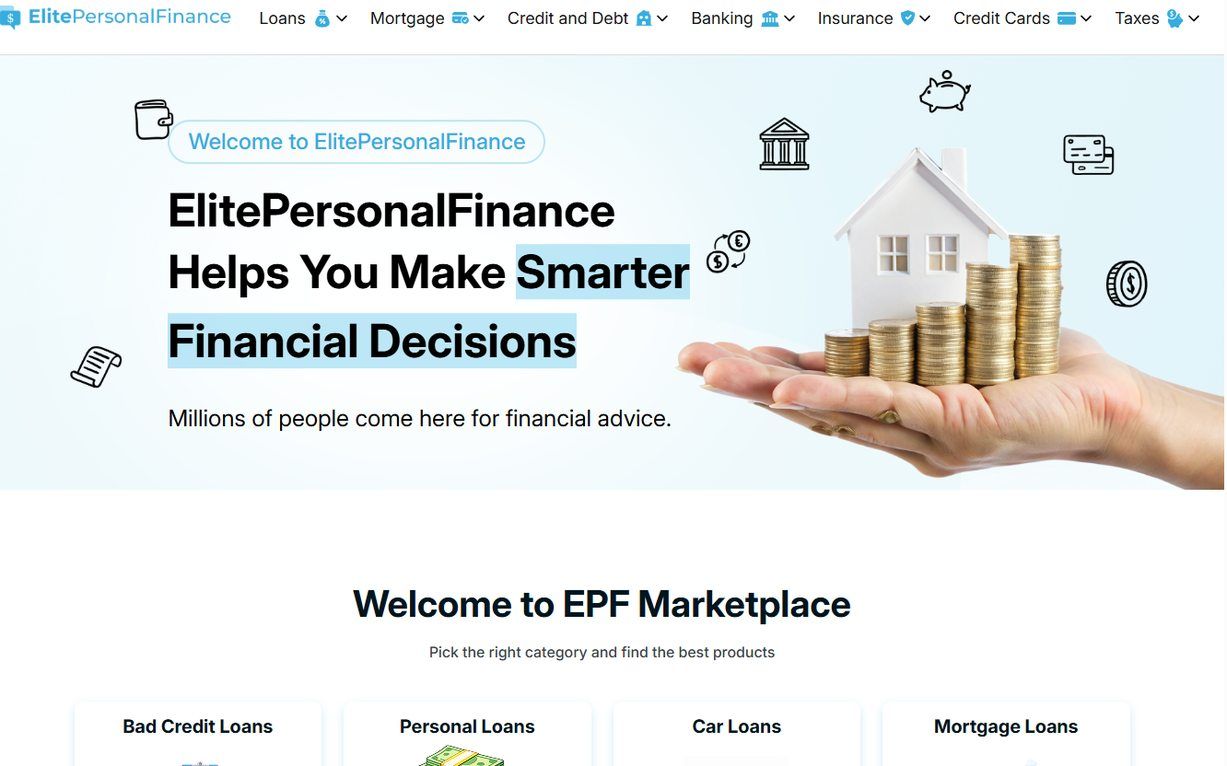
For those standing at the very beginning of their financial journey, this marketplace acts as a vital bridge. It is specifically designed for individuals who might be struggling with low scores or simply have no history to speak of.
They focus on getting you approved quickly by connecting you with a network of lenders who specialize in high-risk or thin-file profiles. If you find yourself needing a small boost to cover immediate expenses, such as a sudden car repair, this is a strong contender.
They cater to those with scores as low as 400, which is a lifesaver when traditional banks turn you away. It is a practical solution for those looking to escape the payday loan cycle by accessing more structured, predictable personal loans.
Pros:
- Extremely fast 5-minute approval process.
- Accepts very low credit scores between 400 and 500.
- Provides a wide marketplace of competing lenders, allowing for more options.
Cons:
- Interest rates for bad credit can reach up to 20%.
- Loan amounts are capped at $5,000, which limits its use for major life events.
2. FastLendGo
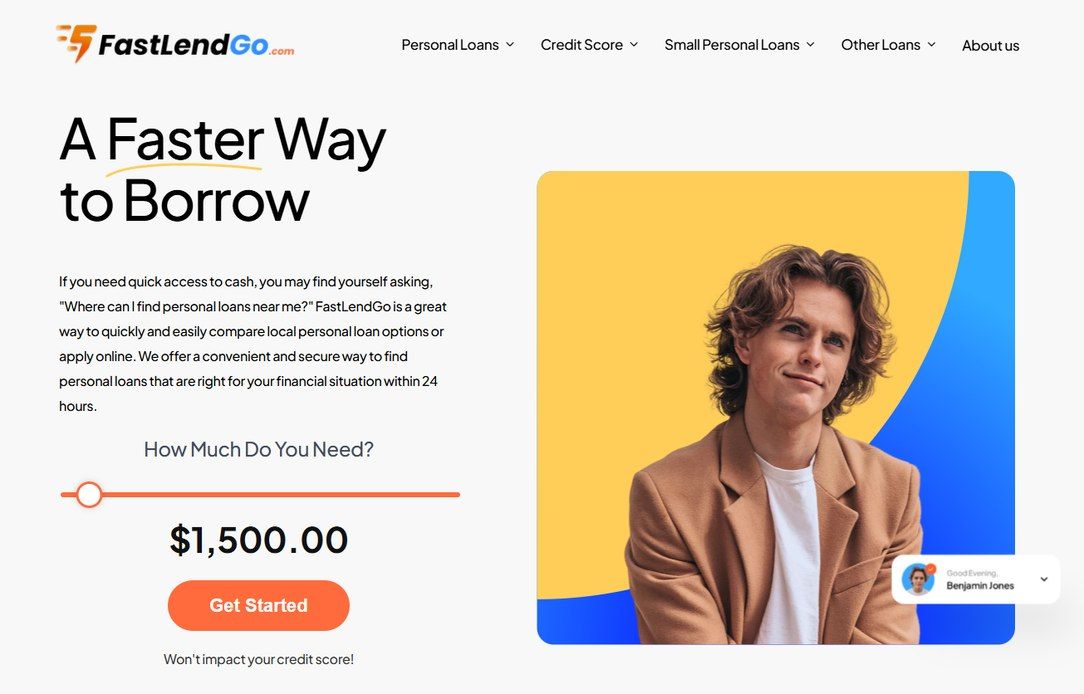
Life doesn’t always wait for a perfect credit score to happen. Sometimes, you just need cash for an emergency repair or a sudden medical bill. This lender seems to understand that urgency, offering various loan sizes tailored to different immediate needs.
They focus on the “why” behind the loan, recognizing that a person with no credit history is often a person facing an unplanned life event. (fastlendgo.com)
They offer a wide variety of specialized options, from small $500 loans to larger amounts. Whether you are looking for auto repair financing to keep your commute viable or dental coverage to address a sudden infection, they aim to be a partner in your financial recovery.
Pros:
- Offers a wide range of loan amounts from $500 up to $5,000+.
- Provides specialized financing for specific needs like auto or dental.
- Includes options for first-time loans with no credit history.
Cons:
- Availability may be limited to specific states.
- Terms and rates are not explicitly listed for all categories.
3. PayPal
Many people already have this digital wallet sitting in their pocket without realizing its potential for lending. Because they see your transaction history—how often you pay your utilities or how consistent your income deposits are—they have a unique window into your financial habits.
This “alternative data” is a game-changer for those without a FICO score. This is an excellent choice for those who already use the platform for shopping or sending money to friends. It integrates into your existing digital life, making the management of borrowed funds incredibly easy.
You can see your balance, your due date, and your repayment schedule all within the same app you use to pay your friends for dinner. It is a streamlined way to handle debt without jumping through extra hoops.
Pros:
- Highly convenient for existing users of the digital wallet.
- Secure, encrypted transactions and easy payment tracking.
- Strong buyer protection for various purchases.
Cons:
- Requires a history of active use to be most effective.
- Full terms for personal loans can be complex to navigate.
4. World Finance
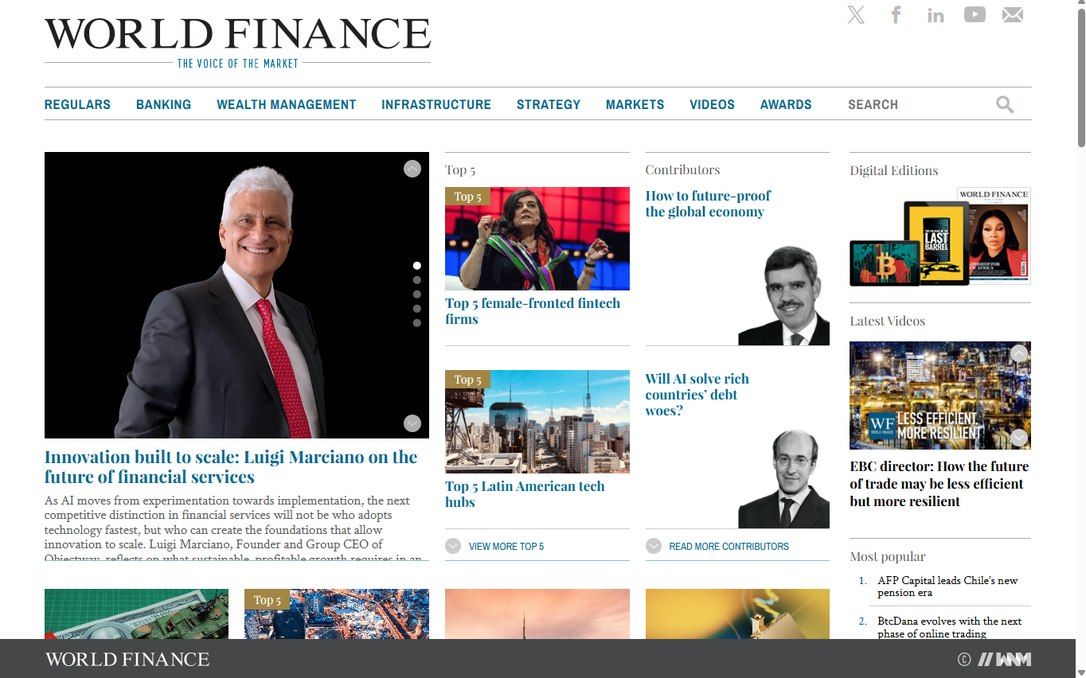
This option is geared toward those who want a more institutional approach to their financial planning. It is less about a quick cash injection and more about understanding the broader landscape of banking and investment.
This is ideal for individuals who are looking to transition from “surviving” to “planning.” They want a lender that provides a sense of stability and professional oversight. While it might feel more complex, it is suited for those looking to understand the mechanics of global finance.
It is less of a “quick fix” and more of a deep dive into the world of retail and private banking. Using a large-scale institution can help you get used to the high standards of documentation and reporting that you will eventually need when you apply for a mortgage.
Pros:
- Provides a massive breadth of financial information.
- Covers everything from retail to investment banking.
- Useful for understanding long-term economic shifts.
Cons:
- Not focused on quick, small-sum emergency loans.
- The complexity may be overwhelming for a first-time borrower.
5. Discover
If you are looking to play the long game, building a relationship with a major name is a smart move. They offer a way to check your eligibility without any risk to your burgeoning credit score. This is a strategic move for anyone currently starting their credit.
This is a great way to “test the waters.” You can see if you are pre-approved, which gives you a sense of your standing in the eyes of a major lender without the fear of a hard inquiry damaging your record.
A pre-approval is a non-binding indicator of your creditworthiness. It provides a psychological boost and a practical data point for your financial planning. It helps you know where you stand before you make a big move.
Pros:
- Pre-approval checks have no impact on your credit score.
- Nationwide acceptance and highly reputable brand.
- Potential for cash back rewards on certain products.
Cons:
- Stricter requirements compared to specialized bad-credit lenders.
- May be harder to qualify for without an established history.
6. OneMain Financial
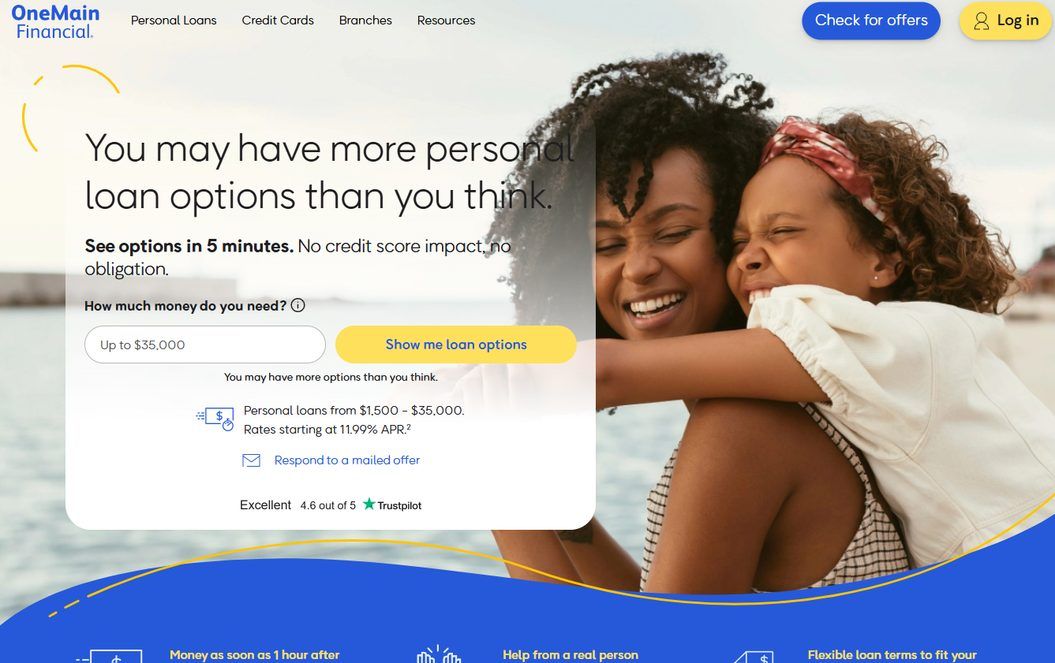
Sometimes, you just need to talk to a human being. This lender provides the comfort of physical branches alongside an efficient online application process. This is particularly helpful for those who may have complex income streams like gig work or freelance income.
Automated algorithms might struggle to categorize your earnings correctly, but a human can look at the bigger picture. They are a powerhouse for those who need larger sums, such as $35,000, to handle significant life changes like consolidating high-interest debt.
The ability to get money as soon as one hour after signing is a major advantage when time is of the essence. This is vital when the “digital-only” lenders do not offer the loan amounts you require.
Pros:
- Can provide funds as quickly as one hour after signing.
- Large loan amounts available up to $35,000.
- Access to over 1,300 physical branches for in-person help.
Cons:
- Higher interest rates may apply to certain profiles.
- Requires more documentation for larger loan amounts.
Understanding the Cost of Credit for Beginners
When you are starting out, the “cost of money” is often higher because you are an unknown variable. Lenders compensate for this risk by charging higher interest rates. It is vital to understand the difference between the APR and the total interest paid.
A low interest rate on a 36-month loan might actually cost you more in total than a higher interest rate on a 12-month loan. Always perform a “total cost of borrowing” calculation before signing any agreement.
For example, consider two scenarios for a $2,000 loan:
| Scenario | Interest Rate (APR) | Term Length | Total Interest Paid |
|---|---|---|---|
| Option A (Quick Payoff) | 25% | 12 Months | ~$275 |
| Option B (Low Payment) | 15% | 36 Months | ~$500 |
While Option B offers a much smaller monthly payment, you end up paying nearly double the interest of Option A. As a new borrower, your goal should be to use these loans to build credit, not to stay in debt.
Once your score reaches the 650+ range, you should immediately look to refinance these high-interest loans into lower-interest products. This is how you turn a temporary tool into a long-term financial advantage.
Navigating Your First Loan Application
Before you click “apply” on any of these options, make sure you have your paperwork in order. A lender is much more likely to say yes if you can immediately provide proof of identity, employment, and income.
This includes recent pay stubs, bank statements from the last 60 days, and perhaps a W-2 or a 1099 if you are self-employed. Having these PDFs ready to upload can be the difference between an instant approval and a week of waiting.
Avoid the trap of applying for multiple loans at once. Every time you apply, it can create a footprint that signals desperation. If you apply for five different loans in one week, your credit score might actually drop due to the surge in “hard inquiries.”
Instead, use the pre-qualification tools available to see where you stand without hurting your score. This keeps your financial reputation intact as you build it. Finally, always look at the total cost, not just the monthly payment.
A low monthly payment might look attractive, but if the loan lasts for five years, you will end up paying much more in interest than you expected. Always read the fine print to ensure the debt remains a tool rather than a burden.
Specifically, look for “prepayment penalties.” You want to be able to pay the loan off early if you get extra cash without being charged a fee for doing so. This flexibility is worth its weight in gold.